20 Health & Wellness Ad Examples Brands Kept Running on Meta
Checked 25 Oct 2026 · 20 ads from 12 brands, from Meta's Ad Library · How we pick ads
Wellness devices sell a result nobody can photograph, so the ads here prove it some other way: a red glow landing on skin, a named habit the product replaces, or a payment route for health-account money. Of these 20 ads, 17 had run past 90 days when we checked, and the longest, at 520 days, are Joovv's two photos with no text on the picture and a claim held to the headline "True Medical-Grade".
- 17of 20 ads had run past 90 days when we checked
- 520+days, the longest run (Joovv)
- 144days, the median run when we checked
Five ways to prove a result nobody can photograph
Grouped by the job each ad does. Swipe a row, and tap “Why it works” for our breakdown.
The red glow does the proving · 3
A light device cannot show firmer skin or easier muscles in a still, so the picture shows the light landing on a body in a lived-in room. Joovv keeps its two pictures free of text and moves five-star customer quotes into one body, and HigherDOSE lays a model on its mat under three hedged lines.
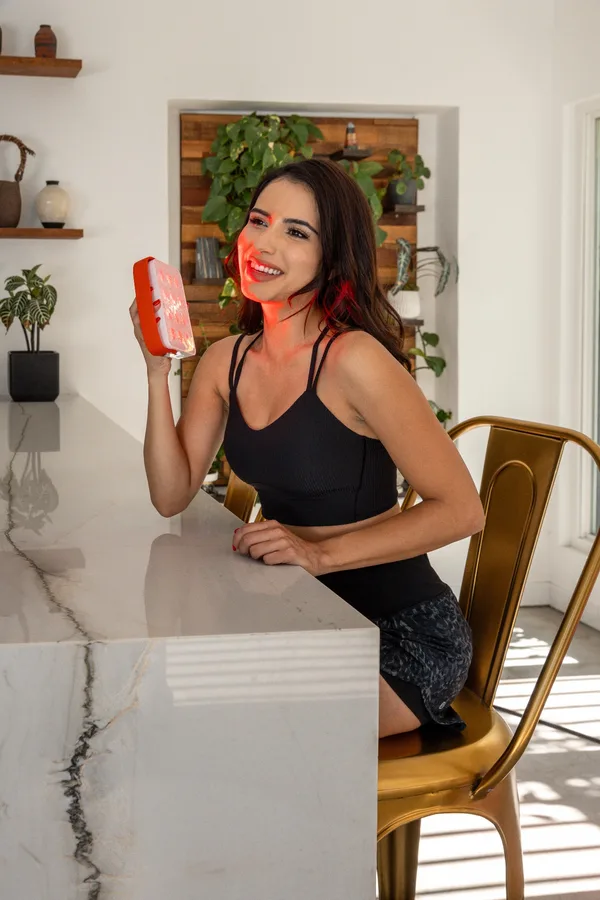
“True Medical-Grade”
Why it works
A woman at a marble kitchen counter holds a glowing red panel to her face and smiles, with no text on the picture. Red light therapy cannot be demonstrated in a still, so the ad shows the glow reaching skin in an ordinary home. The proof moves into the body copy: three five-star customer quotes about clearer skin, fewer wrinkles and better recovery. Only the headline, "True Medical-Grade", carries a claim of the brand's own.
Started 23 May 2025. Live when checked on 25 Oct 2026. View in Meta Ad Library ↗
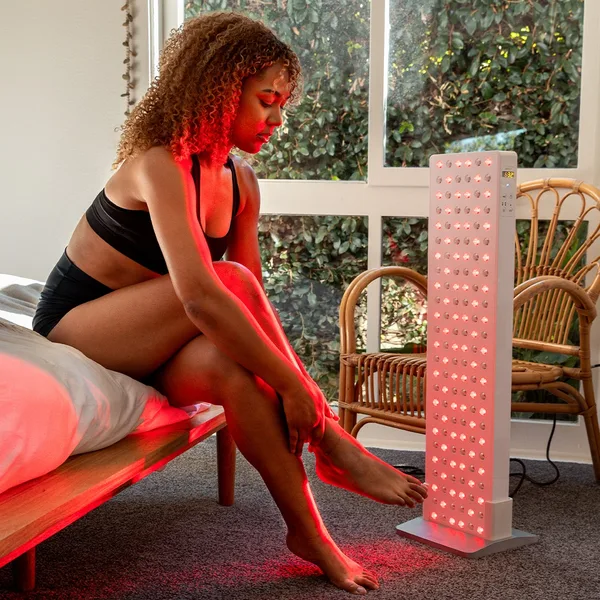
“Experience the powerful benefits of at-home red light therapy”
Why it works
A woman sits on the edge of a bed with a tall, glowing red panel standing a few feet from her legs, a bright window behind. The unit is large, so the frame does the sizing job: it shows where the thing lives, how close you sit and that it plugs in beside the bed. The body adds one plain sentence and nothing more. Here the room makes the argument that the copy leaves out.
Started 23 May 2025. Live when checked on 25 Oct 2026. View in Meta Ad Library ↗
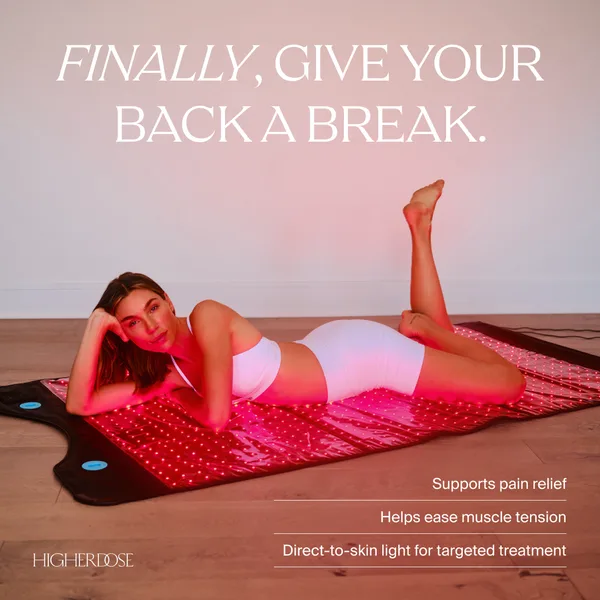
“Finally, give your back a break.”
Why it works
A model lies on a glowing red mat on a wood floor under a two-line headline, with three benefit lines in the lower right separated by thin rules: "Supports pain relief", "Helps ease muscle tension" and "Direct-to-skin light for targeted treatment". The headline speaks to one body part, which turns a general wellness mat into a back product, and the verbs stay hedged. The ad's headline field adds "Trusted By Professional Athletes". Nothing on the picture promises a cure.
Started 3 Sep 2026. Live when checked on 25 Oct 2026. View in Meta Ad Library ↗
Price and payment come first · 5
When the result cannot be shown, the cost side can still be made certain. Therabody's whole picture announces HSA/FSA payments, Megelin and RYZE stack a discount with free gifts, and Power Plate sells a bundle with a free program.
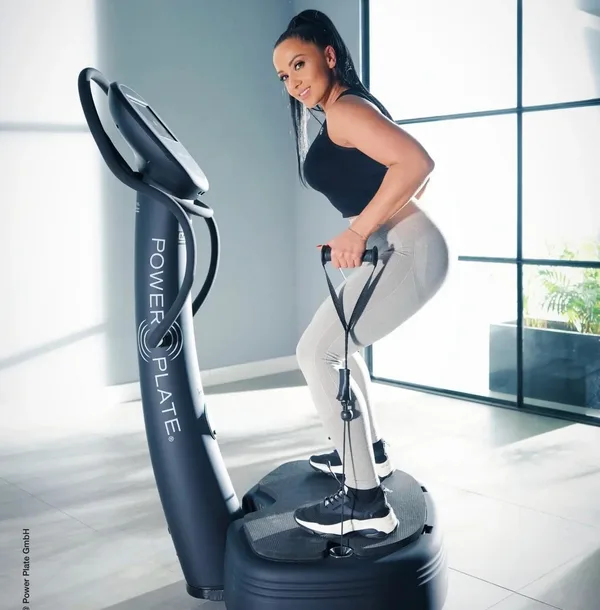
“Do you know how to use a Power Plate?”
Why it works
A woman in a squat on a vibrating platform, holding a resistance cord, smiles at the camera in a bright glass-walled room. Few buyers know what a vibration plate is for, so the long body copy teaches it: stand on it, switch it on, feel it after 60 seconds, step on between sets. The picture shows posture and the text builds the habit. The offer, "Fit for Summer Bundle & Program", comes last. Explaining first and selling second suits a machine nobody has used.
Started 30 Oct 2025. Live when checked on 25 Oct 2026. View in Meta Ad Library ↗
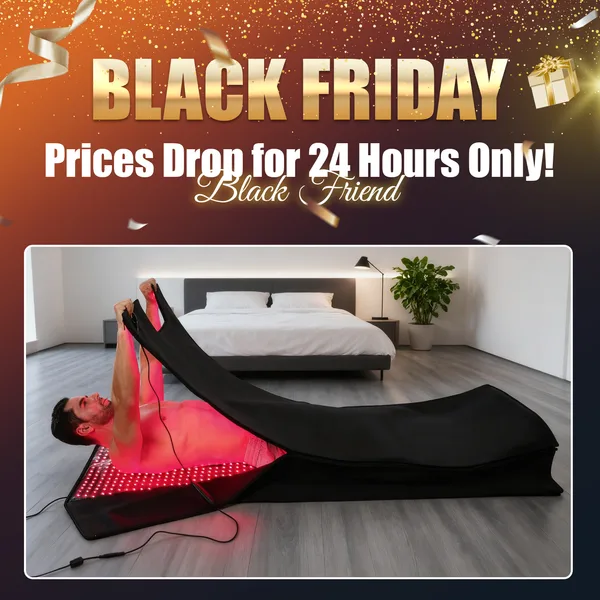
“Last Chance: 60% OFF + FREE LED Belt”
Why it works
A glitter-and-gold Black Friday banner sits above a framed photo of a man lying under a lit red-light bag in a bedroom. The banner carries the offer and the photo carries the proof, so the ad needs no claim about results on the picture. The body stacks 60% off with a free LED belt, then answers the buyer's next worries in short ticks: a 60-day price guarantee, free shipping and a one-year warranty. Guarantees do as much work as the discount for a device nobody can try first.
Started 2 Dec 2025. Live when checked on 25 Oct 2026. View in Meta Ad Library ↗
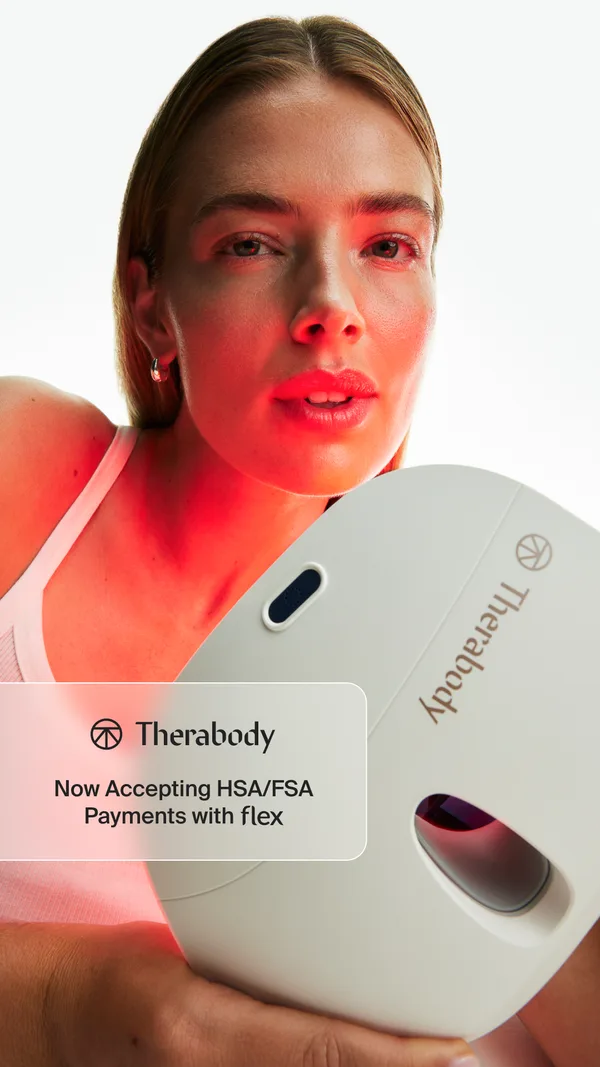
“FSA/HSA Shop”
Why it works
A close beauty portrait fills the tall frame: a woman's face lit red, the mask held against her chest, and a frosted card across the lower left saying the brand now accepts HSA/FSA payments. A face device invites the question of how to pay, and the card answers it before any claim about skin. The body adds "For glowing skin all year long." and points shoppers at the TheraFace Mask Glo. It ran 209 days.
Started 30 Mar 2026. Live when checked on 25 Oct 2026. View in Meta Ad Library ↗
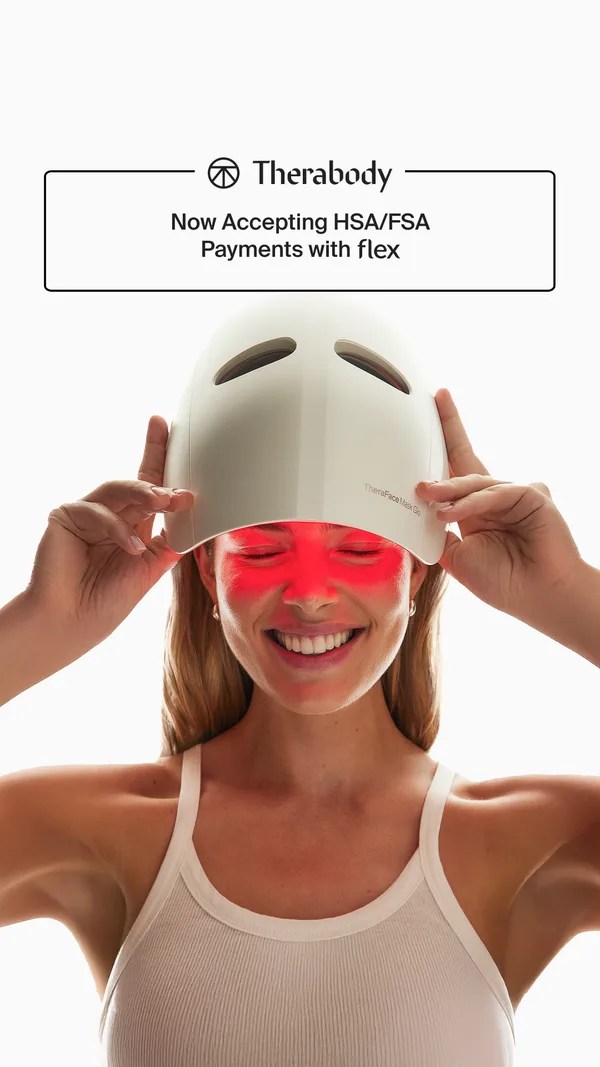
“Now Accepting HSA/FSA Payments with flex”
Why it works
The same announcement in a boxed card above the picture, now on a white ground with a woman laughing as she lifts the glowing mask off her face, red light still on her skin. Where the first version is moody editorial, this one is bright and shows the mask coming off, which answers what wearing it feels like with a grin. The brand name sits in the card's top border. Set beside its sibling, the pair gives one offer a fashion look and a daily-use look.
Started 30 Mar 2026. Live when checked on 25 Oct 2026. View in Meta Ad Library ↗
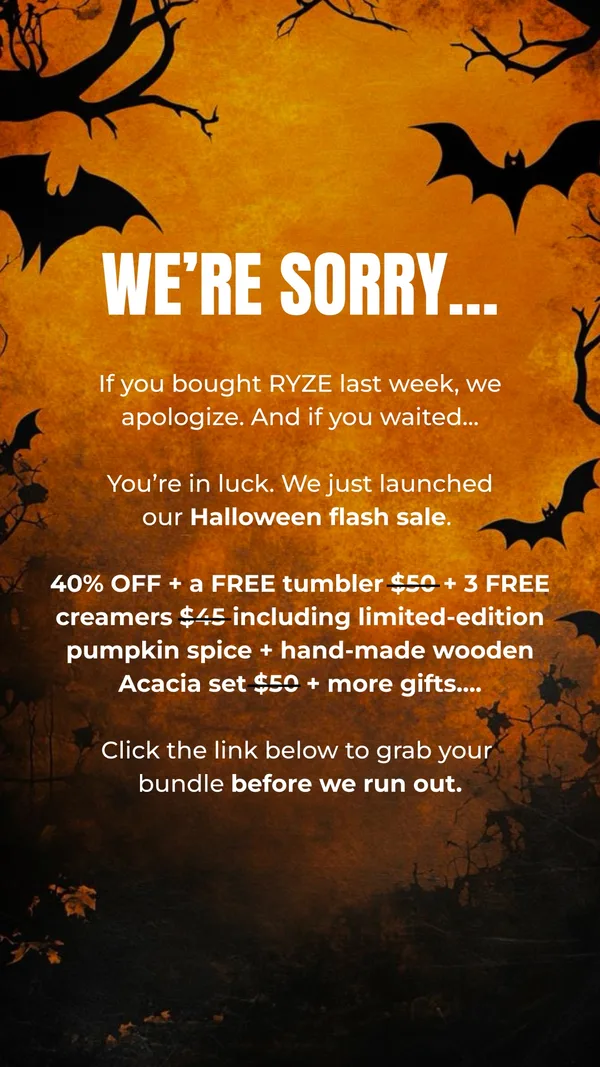
“We're sorry...”
Why it works
An orange Halloween graphic with black bats opens on "WE'RE SORRY..." and then reveals the sale: 40% off plus a free tumbler, 3 free creamers and a wooden set, with a struck-through retail value beside each gift. The apology interrupts a feed full of wellness promises, and the gift stack gives a food-and-drink brand a price story in place of a health claim. The mushrooms and immune support appear only in the body. RYZE splits the job: the picture holds the offer and the text holds the ingredients.
Started 29 Sep 2026. Live when checked on 25 Oct 2026. View in Meta Ad Library ↗
A person's voice, not the brand's · 4
Intimate care, sleep and stress are awkward to claim in a brand voice, so these ads borrow another one: Honey Pot's handwriting, a dorm text thread for Manta Sleep and a reviewer's selfie quote for Apollo Neuroscience.
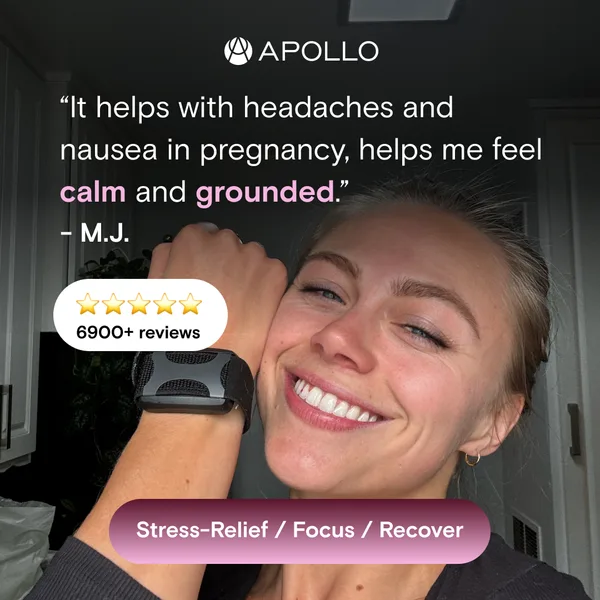
“Feel Calm, Stay Grounded”
Why it works
A smiling selfie fills the frame with the band visible on the wrist, a pull quote about feeling "calm and grounded", and a badge reading 6900+ reviews. Stress cannot be photographed, so a face and a stranger's initials stand in for the feeling. The body then supplies the mechanism and two short reassurances, "Non-invasive. Drug-free.", before citing 17 clinical studies. That badge on the photo is what turns a casual selfie into evidence.
Started 4 Mar 2026. Live when checked on 25 Oct 2026. View in Meta Ad Library ↗

“Periods? Odor? We can handle it all.”
Why it works
Handwritten black type on a pink panel asks "Periods? Odor?" and answers "We can handle it all.", beside a bicycle basket filled with the brand's wipes, wash and boxes. Intimate care is awkward to put in a formal headline, so the ad borrows a friend's voice, a casual outdoor snapshot and a sign-off, "Love, your Honey Pot." The range is shown as a handful of products, not one hero, which makes the line easy to scan. Handwriting lowers the temperature of a topic people avoid.
Started 18 May 2026. Live when checked on 25 Oct 2026. View in Meta Ad Library ↗

“Now we can have that "ooh, ahh" tingle every day.”
Why it works
The same handwritten layout on mint green, now with an open gym tote holding wipes, a foam wash, a water bottle and a yoga mat. The line promises a tingle and leaves the product's job to the body copy's "Cooling Ritual". The tote places intimate care inside an active day instead of a medical routine. Both versions share one headline, "Your intimate skin deserves the best.", and one sign-off, so only the scene and the handwritten line change.
Started 18 May 2026. Live when checked on 25 Oct 2026. View in Meta Ad Library ↗
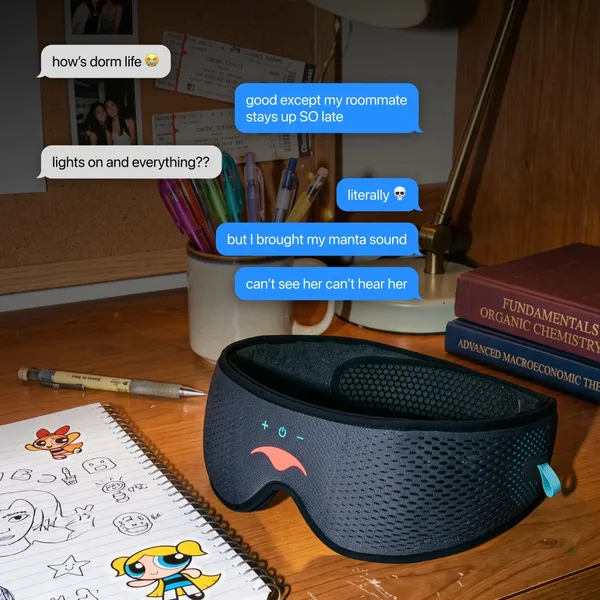
“Better Nights. Better Semester.”
Why it works
A fake iMessage thread floats over a dorm desk where a sleep mask sits beside textbooks and a sketchbook: one friend asks about dorm life, the other mentions a roommate with the lights on, and "can't see her can't hear her" is the pitch. A sleep mask looks identical to a dozen others, so the chat lets a peer recommend it. The body then turns the school year into two problems, light and noise. Sleep gear cannot show its result, so a friend's one-line text stands in for it.
Started 24 Aug 2026. Live when checked on 25 Oct 2026. View in Meta Ad Library ↗
Naming what it replaces · 3
A comparison with a pill, a serum or a phone alarm carries the claim, so the ad does not have to prove an outcome from nothing. Apollo Neuroscience sets its band against melatonin and Bon Charge sets its mask against skincare that sits on top.
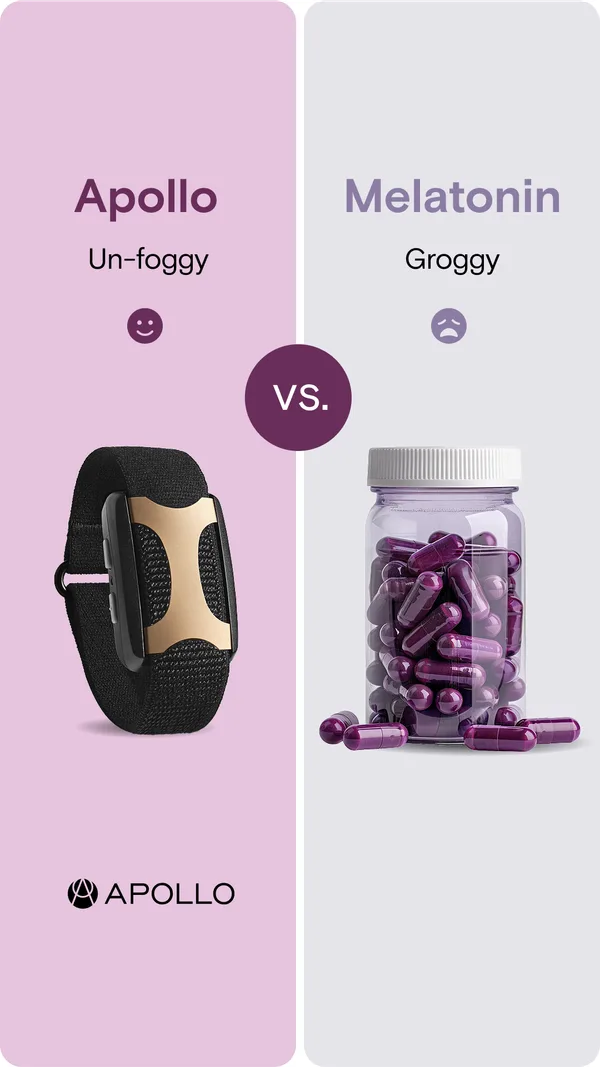
“60 More Min of Sleep”
Why it works
A split screen sets a black band on a pink panel against a melatonin bottle on gray, joined by a "VS." circle, with "Un-foggy" over a smile and "Groggy" over a frown. The comparison names the thing a tired buyer already takes and gives it a downside, a lighter job than proving sleep gains. The body presses the point ("Melatonin is a band-aid.") and then offers "Up to 60 more minutes of sleep per night" as the payoff. Everything on the image fits in two words per side.
Started 8 Apr 2026. Live when checked on 25 Oct 2026. View in Meta Ad Library ↗
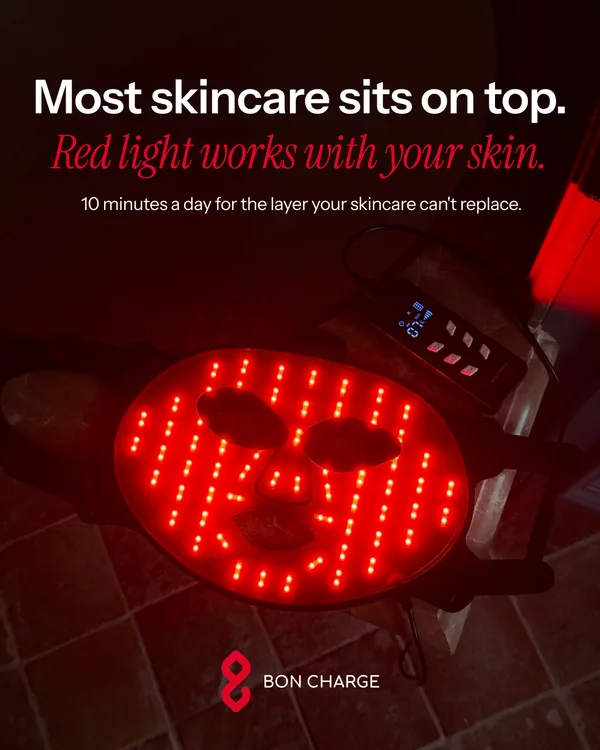
“Most skincare sits on top.”
Why it works
A dark, red-lit shot of the face mask glowing on a tiled floor sits under a white headline, "Most skincare sits on top.", and a red italic reply, "Red light works with your skin." The ad opens by marking down the category the buyer already trusts, then offers the mask as the layer cream cannot reach. The body names collagen and elasticity and gives a schedule: ten minutes a day, hands-free. On a black ground the LEDs are the brightest thing in the feed.
Started 19 Jun 2026. Live when checked on 25 Oct 2026. View in Meta Ad Library ↗
“Loftie vs. Other Smart Alarms”
Why it works
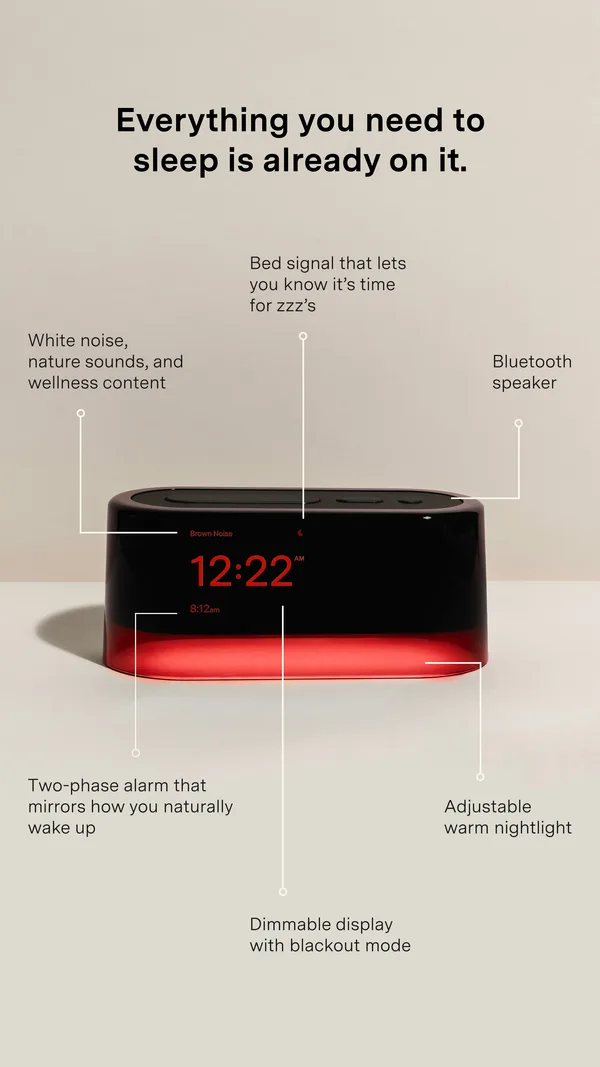
A black clock with a red glow stands centered on a beige ground, with thin lines running out to labels for white noise, the Bluetooth speaker, a two-phase alarm, a warm nightlight and a dimmable display. The headline sets Loftie against other smart alarms, and the body names the rival's weakness: apps, subscriptions and a phone that never leaves the bedroom. Because better sleep cannot be shown, the ad sells a bedroom without a phone in it. Its body also cites "a 5-time Wirecutter Pick."
Started 18 Jul 2026. Live when checked on 25 Oct 2026. View in Meta Ad Library ↗
Gadget on show, parts named · 5
An unfamiliar device has to be explained before anyone trusts it, so these ads label the pads, the modes, the layers or the wake-up sequence. Chirp shows its remote's mode list, and Loftie turns a gentler wake-up into two numbers.
“Daily brushing meets daily red light”
Why it works
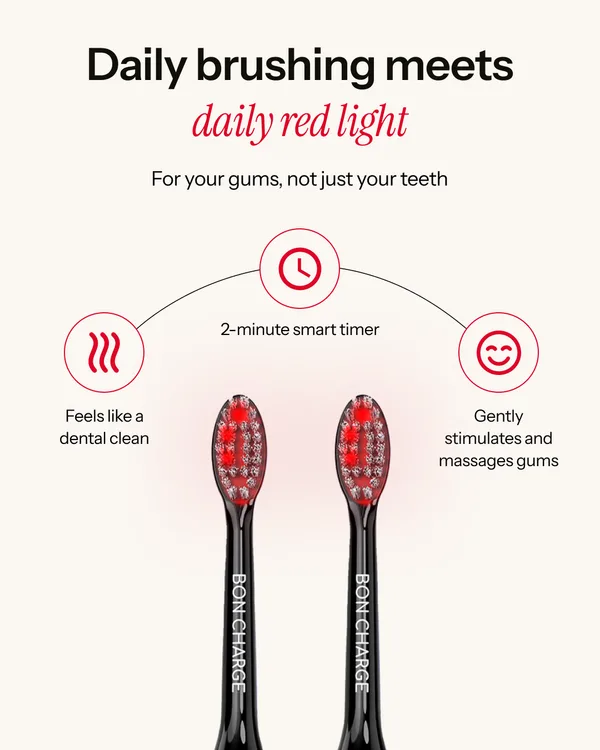
A warm off-white layout puts a two-part headline over a small arch of three icons: a clock for the 2-minute timer, waves for the dental-clean feel, a smile for gum massage. Two black brush heads with red LEDs rise from the bottom edge. Red light in a toothbrush is unfamiliar, so the icons list the benefits in the order a buyer would ask. Red bristles are the one new thing in the frame, which lets the rest of the layout stay plain.
Started 19 Jun 2026. Live when checked on 25 Oct 2026. View in Meta Ad Library ↗
“Relief has never been this easy”
Why it works
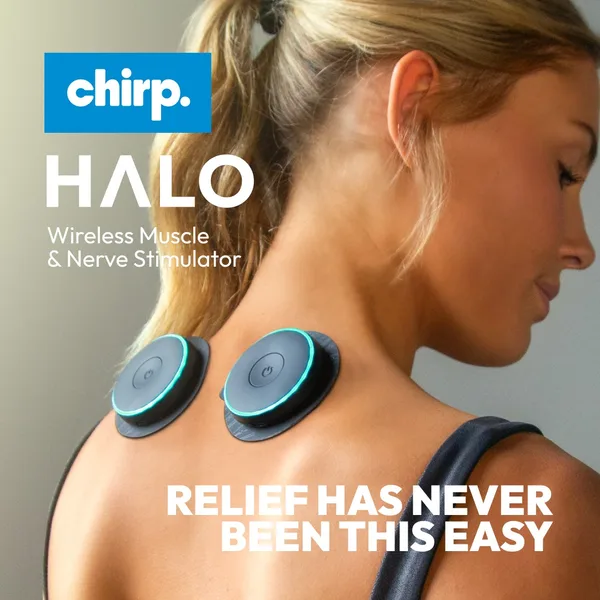
Two round pads sit on a woman's upper back and neck, each ringed in teal, while a blue badge and the words "Wireless Muscle & Nerve Stimulator" sit top left. Pain is invisible, so the ad puts the pads exactly where the pain is and names the category in plain words for a buyer who has never seen a TENS unit. The body lists "Back & neck pain relief", "No wires, no hassle" and "FSA/HSA eligible" as ticks. Pads on skin show the job better than a caption could.
Started 14 Jul 2026. Live when checked on 25 Oct 2026. View in Meta Ad Library ↗
“1000+ hours in. 8 hours out.”
Why it works
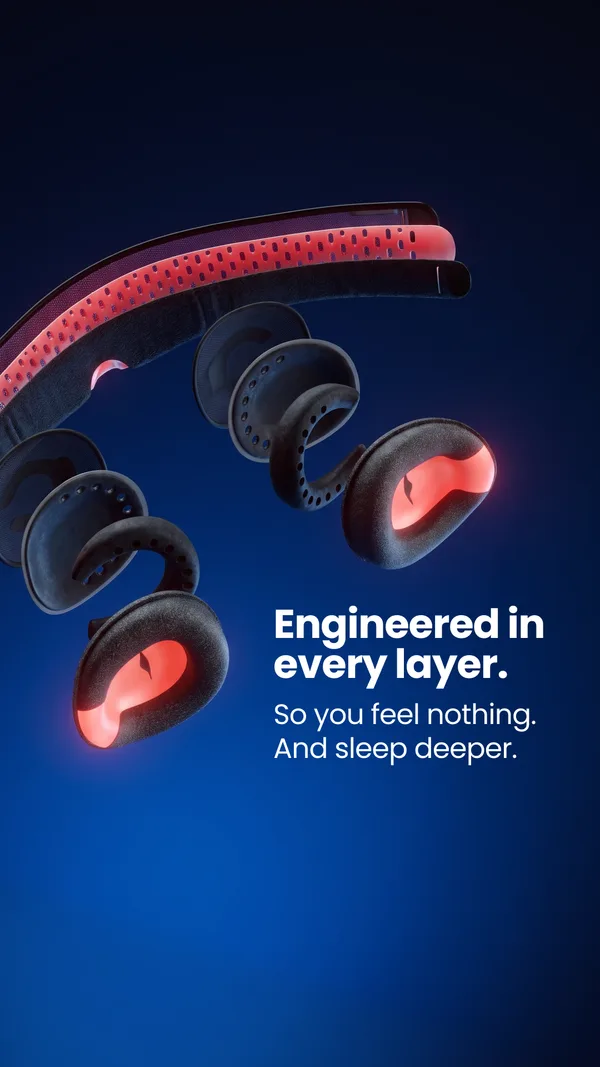
An exploded 3D render pulls a sleep mask apart into its layers on a deep blue gradient, with a red glow inside each eye cup and the line "Engineered in every layer." From outside this mask looks like any other, so the render shows the work inside it. The headline sells effort instead of results, and the body claims "100% blackout every single night". Effort becomes the proof when a night's sleep cannot be photographed.
Started 20 Jul 2026. Live when checked on 25 Oct 2026. View in Meta Ad Library ↗
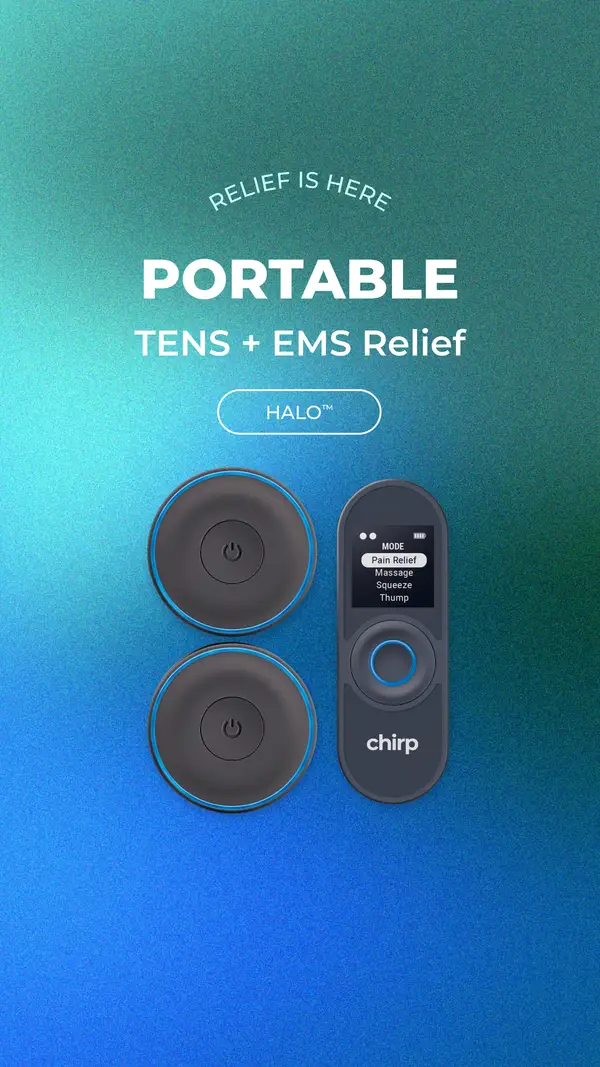
“The World's Simplest Pain Relief Device”
Why it works
On a teal-to-blue gradient the Halo's two round pads and its small remote lie flat under "PORTABLE" and "TENS + EMS Relief", with the remote's screen listing its modes: Pain Relief, Massage, Squeeze, Thump. The body copy matches the on-body version while the layout swaps the person for a catalog view. A buyer who wonders what comes in the box sees every part and the controls. This version answers the unboxing question and its sibling answers where the pads go.
Started 20 Jul 2026. Live when checked on 25 Oct 2026. View in Meta Ad Library ↗
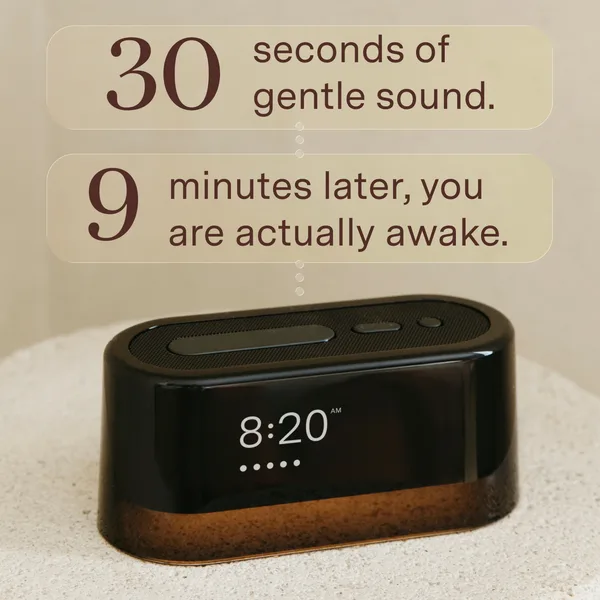
“30 seconds of gentle sound. 9 minutes later, you are actually awake.”
Why it works
Two translucent cards stacked above a clock show a timeline in large serif numerals: 30 seconds of gentle sound, then 9 minutes later you are awake, with the clock reading 8:20 on a sandy surface. The numbers turn a vague promise, a gentler wake-up, into a sequence the viewer can picture. The body supports it with a 30-night money-back guarantee and "Over 100,000 people". Two numbers make a feeling sound measured.
Started 24 Jul 2026. Live when checked on 25 Oct 2026. View in Meta Ad Library ↗
Lines to rework for your own wellness product
Lifted from the ads above. Swap in your own product.
- 01[Familiar fix] sits on top. [Product] works on [the layer it cannot reach].Bon Charge, “Most skincare sits on top.”, 128 days
- 02[Old fix] is a band-aid. [Product] addresses the root.Apollo Neuroscience, “60 More Min of Sleep”, 200 days
- 03Now accepting [payment route] for [product].Therabody, “Now Accepting HSA/FSA Payments with flex”, 209 days
- 04[Number] seconds of [simple input]. [Number] minutes later, [outcome the buyer can feel].Loftie, “30 seconds of gentle sound. 9 minutes later, you are actually awake.”, 93 days
Proving more than you promise in a wellness ad
- Choose one proof you can showA glow on skin, a named swap, a payment route or a quoted voice can each carry an ad when the result itself cannot be photographed.
- Put the device in a roomJoovv's kitchen counter and bedroom show size, distance and where the panel lives, so the picture needs no text.
- Name what it replacesSet the product against a routine the buyer already has, as Apollo Neuroscience does with melatonin and Bon Charge does with a serum.
- Say how to payIf your product qualifies for health-account spending, print the line in the picture or the checklist, as Therabody and Chirp do.
- Keep the verbs softHigherDOSE's "Supports pain relief" and "Helps ease muscle tension" stay inside what a device can reasonably say.
- Read Meta's health rules firstBefore-and-after images and wording that implies a viewer's condition are limited in Meta's ad standards, so check them against your own product.
Sizes and Safe Zones are on our Instagram Safe Zone checker page.
How far the health claims go
Soft verbs on the picture. HigherDOSE prints "Supports pain relief" and "Helps ease muscle tension", and Bon Charge's body promises "softer-looking fine lines" instead of fewer wrinkles.
Numbers with a source. Apollo Neuroscience prints "Backed by 17 clinical studies" and "Up to 60 more minutes of sleep per night". Those are the brand's claims, and we have not verified them. The FTC expects the evidence for a health claim to exist before the ad runs.
A customer's words still count. Joovv's body copy relays customer lines about clearer skin and fewer wrinkles. Under the FTC's Endorsement Guides, a brand has to stand behind a quoted customer's claim as if it had made the claim itself.
Pictures stay on the safe side. None of these 20 ads uses a before-and-after image, which Meta's ad standards restrict. The proof sits in the glow, a quote or a mechanism instead.
Sources: transparency.meta.com, ftc.gov, ecfr.gov
Spending health dollars
The whole picture. Therabody's two ads announce "Now Accepting HSA/FSA Payments with flex" over a face wearing the mask, and the headline is "FSA/HSA Shop". The body says "Use those FSA/HSA dollars on TheraFace Mask Glo", which tells the buyer which pot of money to reach for.
A tick in the checklist. Chirp's body lists "FSA/HSA eligible" as the last tick under "Back & neck pain relief", "All-over muscle recovery" and "No wires, no hassle", in both its Halo ads.
The closing line. Apollo Neuroscience ends its melatonin comparison with "Up to 60 more minutes of sleep per night. Drug-free. HSA/FSA eligible. Free shipping." and closes its selfie ad with "Backed by 17 clinical studies. HSA/FSA eligible."
Wellness ad questions, from results to HSA payments
Can you give me some examples of health ads?
Yes, start with Joovv's text-free red light photo, Apollo Neuroscience's melatonin comparison and Therabody's HSA/FSA announcement, which each prove the product in a different way. All 20 ads on this page ran on Meta, and the shortest had run 26 days when we checked.
Can a wellness ad show results on Meta?
Often not: Meta's ad standards limit before-and-after images and wording that implies you know a viewer's health condition. None of these 20 ads uses a before-and-after picture, and the proof sits in a glow, a quote or a mechanism instead. Read the policy page for your own product before you build.
What do wellness brands show when the result is invisible?
They show the product at work, usually with its light, pads or screen switched on. Joovv's panel glows beside a bed, Chirp's pads sit on a back and Bon Charge's mask lights a dark floor, and each leaves the benefit to the headline or body.
Should a wellness ad mention HSA or FSA?
Yes, if your product qualifies and you can say so plainly. Therabody puts it in the whole picture, Chirp puts it in a checklist and Apollo Neuroscience puts it in the closing line, so there is room to match the tone of the ad.
Do wellness ads need studies or reviews behind them?
A health claim needs evidence behind it, and the FTC expects that evidence to exist before the ad runs. Apollo Neuroscience prints "Backed by 17 clinical studies" and a 6900+ reviews badge, and those are the brand's own figures, not ours.
Make wellness ads like these
Drop in your client's website or your own, and Gimme Gimme studies the longest-running ads in your category, then designs on-brand ads that show the product working instead of promising results.
How we pick ads. We search Meta's public Ad Library for ads from DTC brands that sell to US and UK shoppers, keep ads running 14 days or more, skip catalogue ads, and show at most 3 per brand. Days running is a spend signal: brands rarely keep paying for an ad that doesn't sell. Day counts are as of the check date above. Breakdowns are written by Gimme Gimme's ad analysis engine from each ad's image and copy, and edited by Josh Jackson, founder. Not affiliated with the brands shown; ads appear for commentary and analysis. To have an ad removed, email hello@getgimmegimme.com and we'll take it down within 7 days.