23 Supplement Ad Examples Brands Kept Running on Meta
Checked 25 Oct 2026 · 23 ads from 12 brands, from Meta's Ad Library · How we pick ads
Supplement results happen inside the body over weeks, and federal rules and Meta's ad standards limit what an ad may promise, so the ads here sell what a shopper can see: a flavor, a price, a customer's words or a footnoted claim. The two longest runs, both from Dose at 243+ days, put taste and a discount ahead of liver support, and a handful of the ads print their proof on the picture itself.
- 243+days, the longest run, from Dose
- 22%of ads put a discount or free gift in the frame
- 89days, the median run
- 10ads kept running past 90 days
Five ways supplement ads sell what a photo cannot show
Grouped by the job each ad does. Swipe a row, and tap “Why it works” for our breakdown.
Bottle on a plain stage · 6
The product is the hero and one line does the selling, as with Thesis and its "clean focus > fake energy" or Kaged and its heavy black headline. With no result to show, the bottle sits in clean space and the words name the benefit or the contrast.
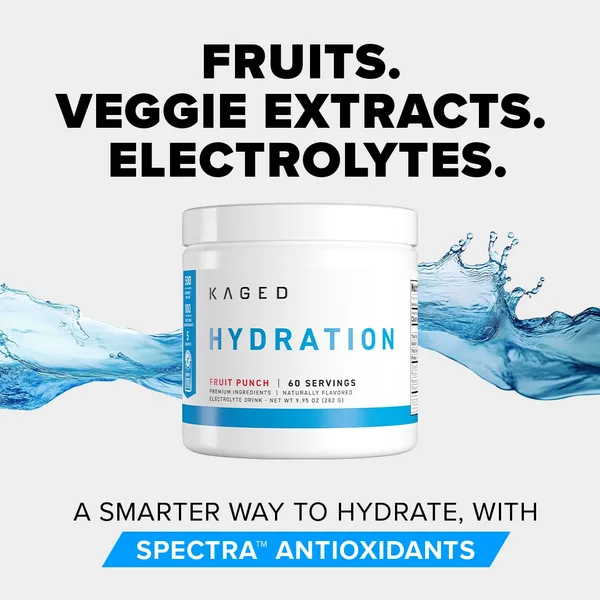
“Same hydration. None of the sugar.”
Why it works
Heavy black type lists what is in the tub, and a water splash runs through the container so the category reads before any word does. The argument sits in the copy above the picture, which sets the sugar in a typical hydration drink against less than a gram here. It is a comparison with no rival logo, and the picture only has to show a full tub. One clean subtraction carries the whole case.
Started 20 Apr 2026. Live when checked on 25 Oct 2026. View in Meta Ad Library ↗
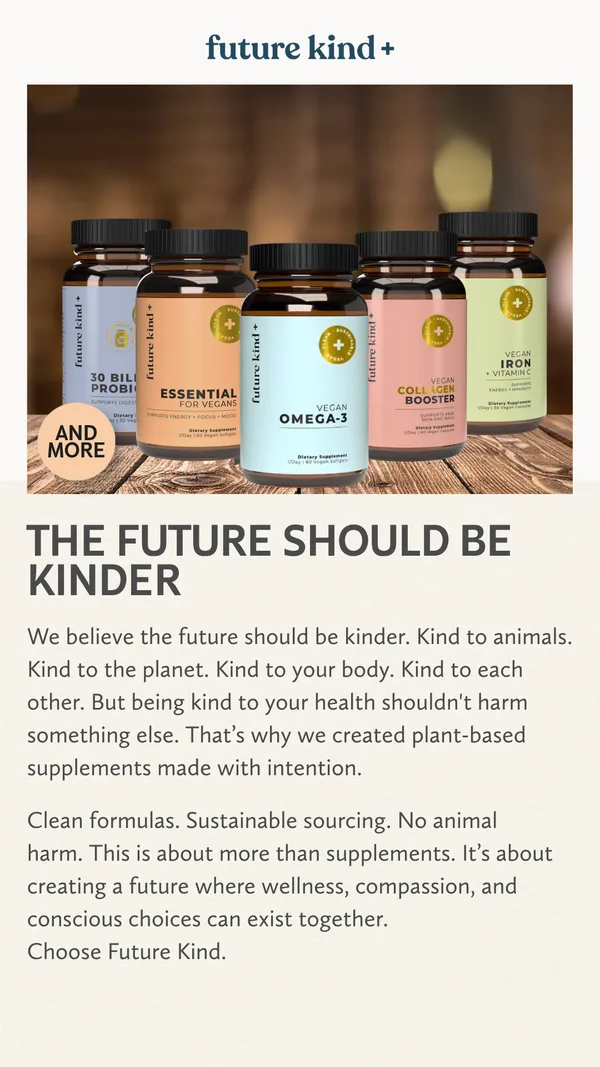
“Plant-Based Nutrition That Actually Works”
Why it works
A cream card in a tall story shape: logo on top, a row of bottles on a wood shelf, then the manifesto headline "The Future Should Be Kinder" over two short paragraphs. No result is promised. The pitch is values, aimed at a shopper who already avoids animal products, and the lineup shows the range behind it. Story height gives the paragraphs room that a tight square would crop.
Started 15 Jul 2026. Live when checked on 25 Oct 2026. View in Meta Ad Library ↗
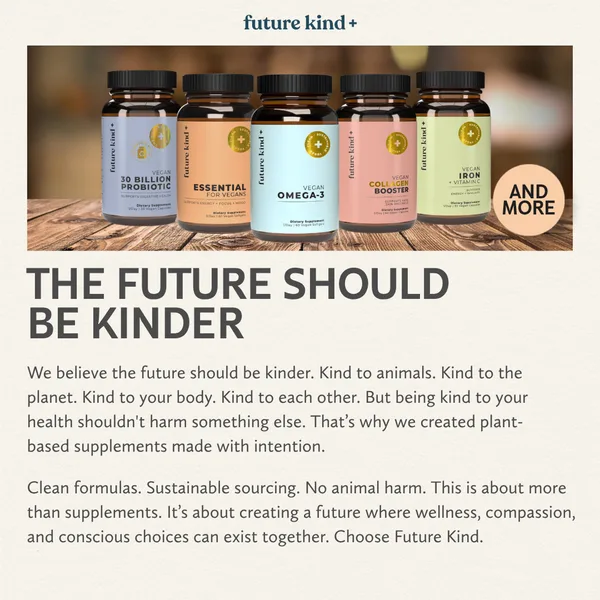
“THE FUTURE SHOULD BE KINDER”
Why it works
The same copy in a square, with the product row moved above the words so the feed crop keeps both. The brand lets the placement decide the shape and keeps one message across both. Because it claims no benefit, nothing in the picture needs an asterisk or a disclaimer, which leaves the page clean and the voice calm. Both Future Kind versions ran 102+ days.
Started 15 Jul 2026. Live when checked on 25 Oct 2026. View in Meta Ad Library ↗
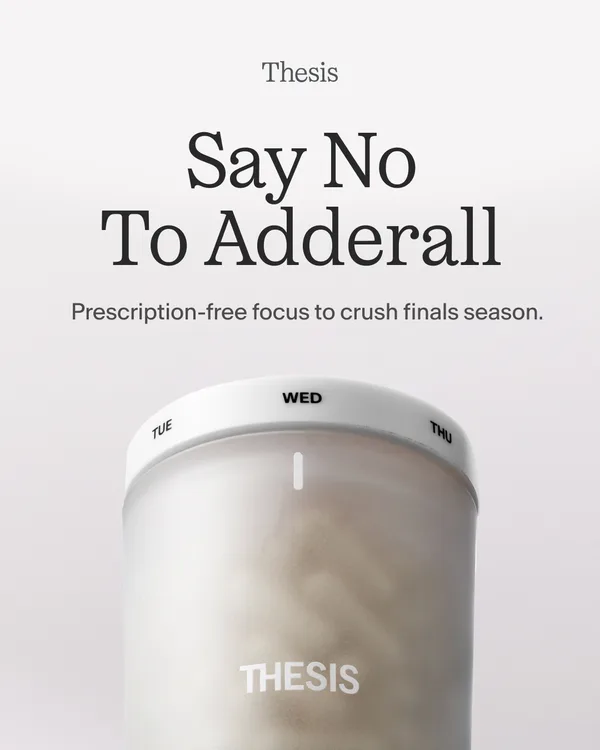
“Say No To Adderall”
Why it works
A serif headline sits over a quiet grey gradient and a bottle with a weekday ring on its lid, with a subline promising "Prescription-free focus to crush finals season". The ad frames the product by naming what it replaces, which saves a paragraph explaining what it does. Putting exam season in the subline gives the shopper a moment to picture, and the body copy repeats the same promise at greater length.
Started 5 Aug 2026. Live when checked on 25 Oct 2026. View in Meta Ad Library ↗
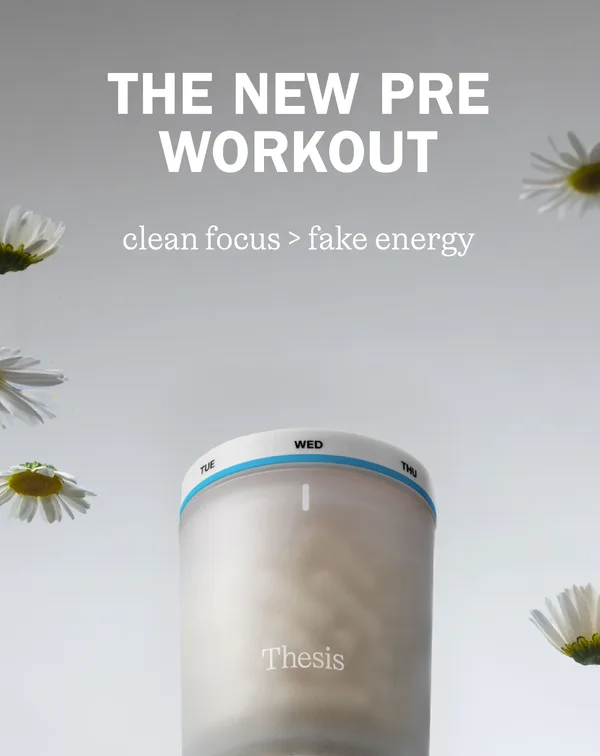
“clean focus > fake energy”
Why it works
A white bottle rises from the bottom edge among daisies, under the headline "THE NEW PRE WORKOUT". The line beneath it does comparison work in a few words, setting the product against the fake energy of other pre-workouts without naming one. Flowers and a pale sky look far from a gym tub, which tells the shopper the energy is gentle.
Started 5 Aug 2026. Live when checked on 25 Oct 2026. View in Meta Ad Library ↗
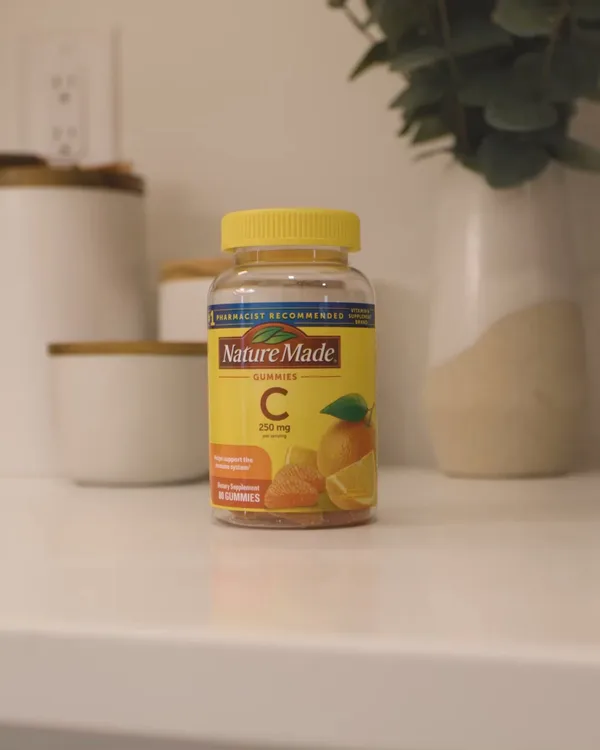
“#1 PHARMACIST RECOMMENDED”
Why it works
A yellow-capped bottle of vitamin C gummies stands alone on a white shelf with ceramics and a plant behind it, and no text is laid over the photo. The only endorsement sits on the label, "#1 PHARMACIST RECOMMENDED", and the copy calls it "a small step in your daily routine with a big impact". With the label doing the persuading, the photo only has to place the bottle in a clean home.
Started 2 Oct 2026. Live when checked on 25 Oct 2026. View in Meta Ad Library ↗
Proof printed on the picture · 5
Quotes, numbers and checklists are set into the image, from the Transparent Labs day-by-day timeline to the spec list beside a Kaged tub. The result happens in the body, so these ads print what a shopper can read.
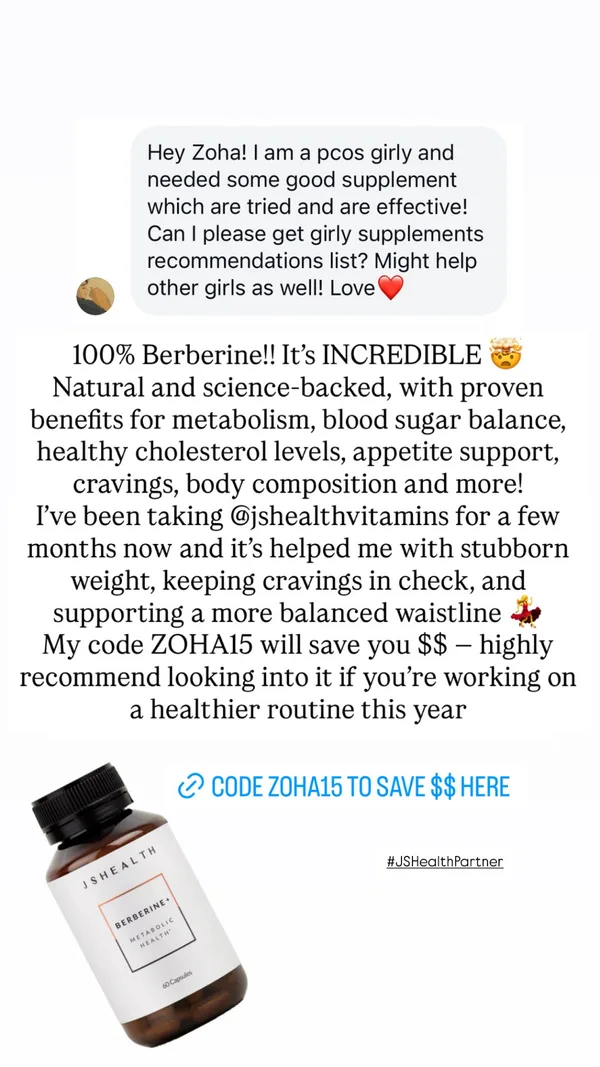
“Natural and science-backed”
Why it works
A reply to a follower's question, laid out like an Instagram story: the question bubble on top, the answer in plain serif type, a code sticker and a brown bottle at the foot. It reads as a recommendation passed between friends, so each claim arrives as one person's experience, with the brand named by its handle and the partnership tagged. Everything about it says story, down to the link-style sticker that carries the discount code.
Started 30 Mar 2026. Live when checked on 25 Oct 2026. View in Meta Ad Library ↗
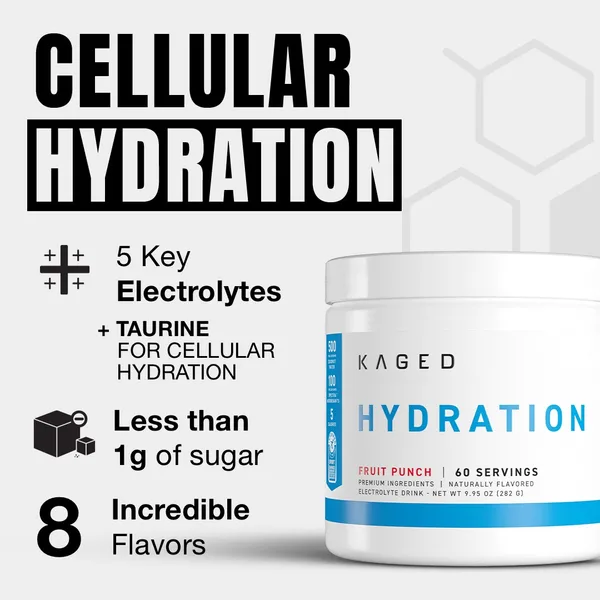
“Less than 1g of sugar”
Why it works
The same copy runs under a second picture, this one built as a tidy spec list: electrolytes, taurine, under a gram of sugar and the flavor count, each with a small icon. A cropped tub on the right fills the space beside them. Where the splash version invites a glance, this one rewards a second look, because every line is a spec a shopper can hold against the label on a rival tub. Kaged ran both for 188 days.
Started 20 Apr 2026. Live when checked on 25 Oct 2026. View in Meta Ad Library ↗
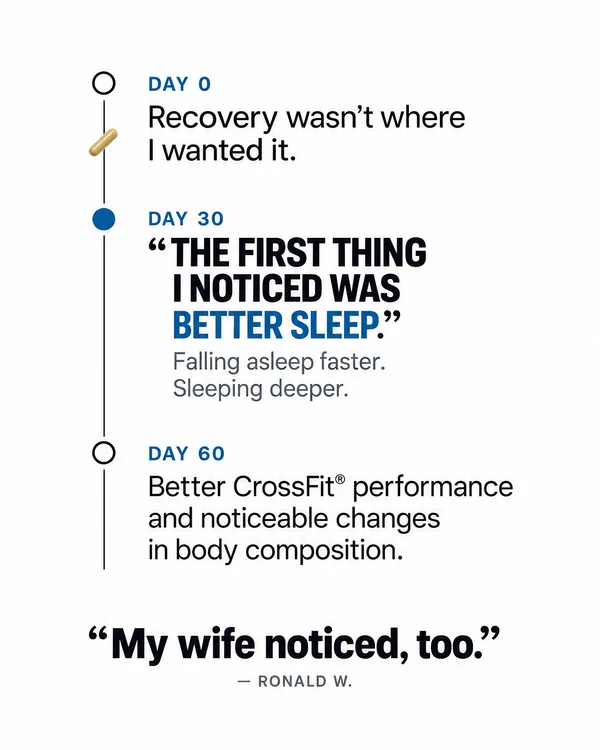
“My wife noticed, too.”
Why it works
A vertical timeline on a white page runs Day 0, Day 30 and Day 60, with a customer's words at each stop: recovery, better sleep, better performance in his sport. It is a testimonial without a photo, so no picture has to carry the change and only dated quotes do. It closes on a line about his wife, signed with a first name and initial.
Started 5 Oct 2026. Live when checked on 25 Oct 2026. View in Meta Ad Library ↗
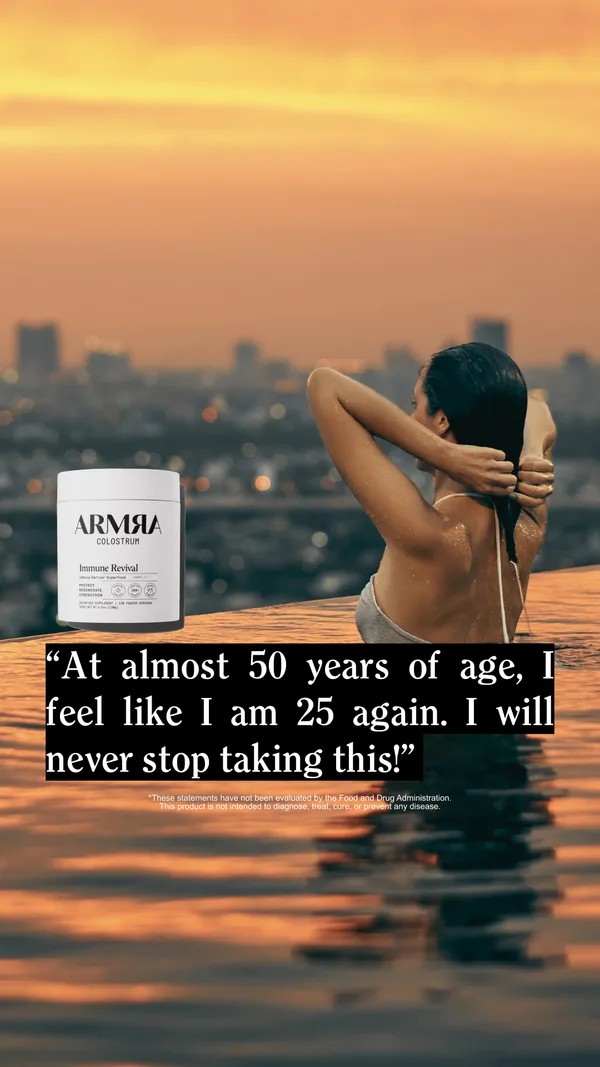
“I feel like I am 25 again.”
Why it works
A full-bleed sunset over an infinity pool, a woman facing away from camera and a tub on the ledge. A black-boxed customer quote crosses the lower third in large type, so the testimonial is the headline and the photo only sets a mood of rest and renewal. Under the quote, the FDA line sits in small type.
Started 7 Oct 2026. Live when checked on 25 Oct 2026. View in Meta Ad Library ↗
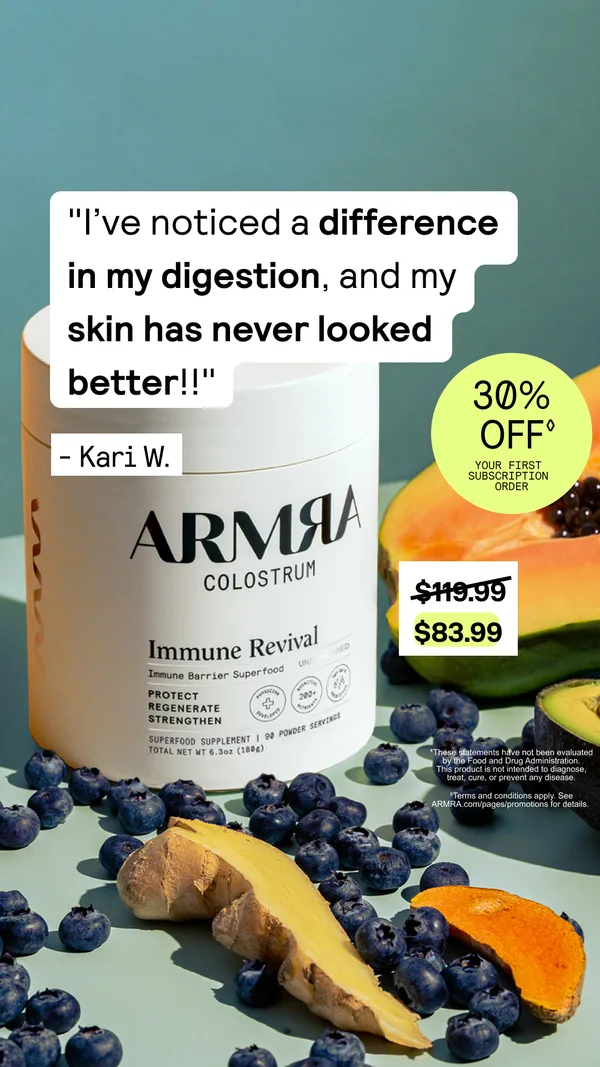
“I’ve noticed a difference in my digestion”
Why it works
A customer quote in a white speech box sits above a tub ringed by blueberries, ginger, papaya and avocado, and a yellow-green badge reads 30% off the first subscription order. Bold type picks out digestion and skin, the two results the quote names. Ingredient props show what colostrum shares a bowl with, and the struck-through $119.99 against $83.99 puts the subscription price in the picture.
Started 7 Oct 2026. Live when checked on 25 Oct 2026. View in Meta Ad Library ↗
Offer or free gift in frame · 5
Dose and Moon Juice put a percentage or a price in the first read, and AG1 puts a bag of free items. A shopper who will not feel a result for weeks can still judge the saving today.
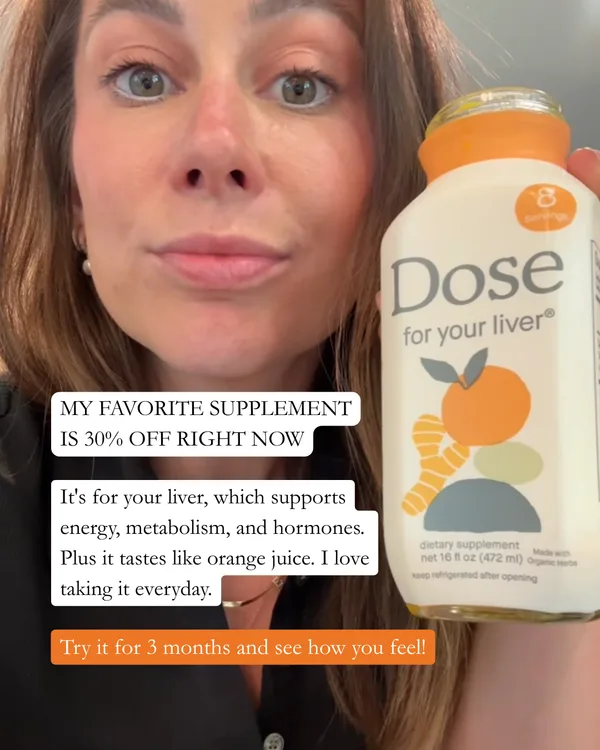
“MY FAVORITE SUPPLEMENT IS 30% OFF RIGHT NOW”
Why it works
A close selfie with the bottle raised to the lens, captioned in the white text boxes of a story post. The discount and the word favorite come first, and the liver benefit waits in the smaller caption below. That order suits a daily shot a stranger has never tasted: the offer lowers the cost of trying it, and the closing line suggests three months, which treats the product as a routine. Savings lead the way here, and the function follows.
Started 24 Feb 2026. Live when checked on 25 Oct 2026. View in Meta Ad Library ↗
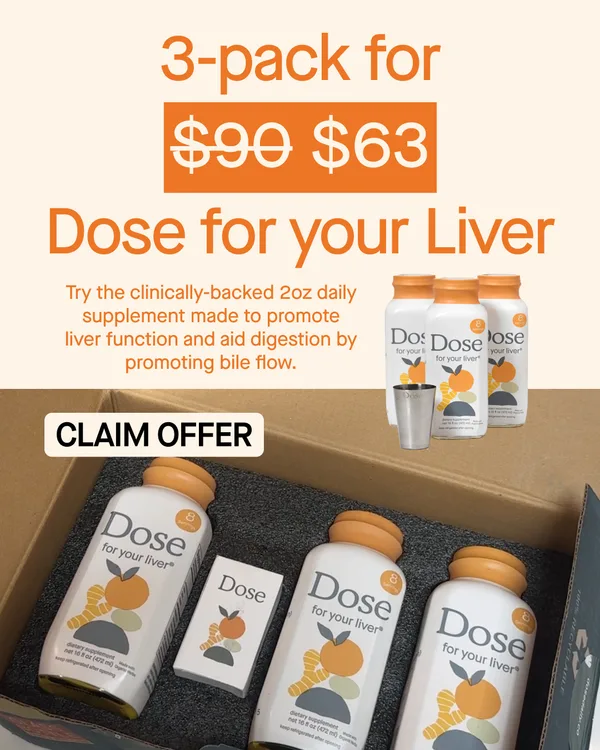
“Tastes Like An Orange Creamsicle”
Why it works
The headline sells a flavor, not an organ. Under it, a struck-through $90 sits beside $63 for a three-pack, and a CLAIM OFFER button floats over a photo of an open shipping box with the bottles packed inside. Liver function appears only in the small paragraph under the price. A supplement that cannot prove a result can still make the first thing a shopper reads a taste and a price. Both Dose ads ran 243+ days.
Started 24 Feb 2026. Live when checked on 25 Oct 2026. View in Meta Ad Library ↗
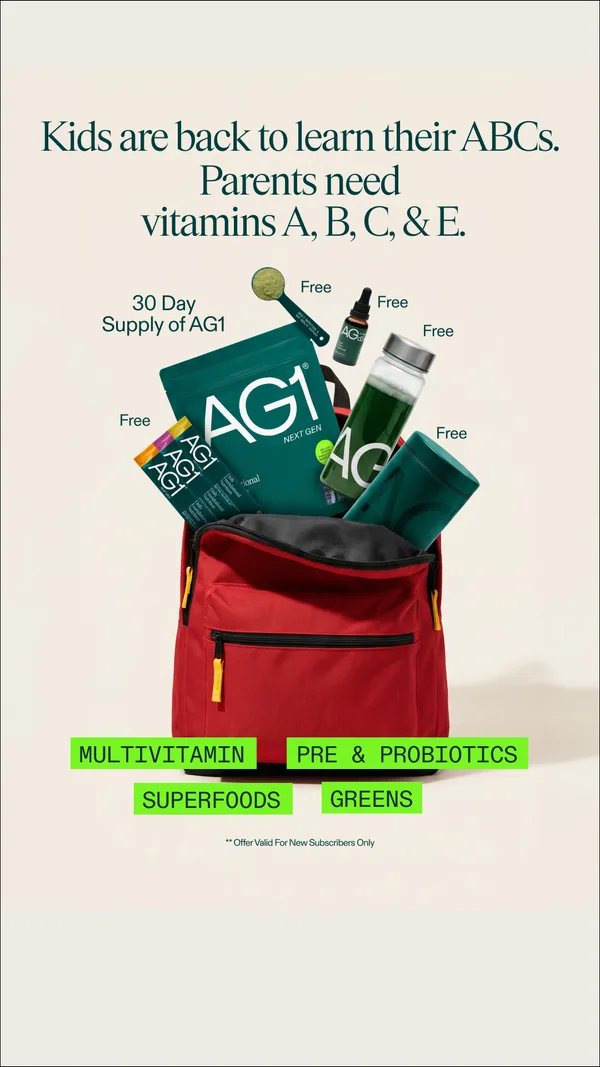
“Parents need vitamins A, B, C, & E.”
Why it works
A red backpack spills a 30-day bag of powder along with a scoop, a dropper, a bottle and a canister, the extras tagged Free, under a joke built on the school alphabet. It borrows the back-to-school moment to sell a daily drink to the parent instead of the child, and the bundle stands in for a discount. Terms are set in small type at the base: the offer is for new subscribers only. A bag turned into a gift basket is the whole product shot.
Started 22 Jul 2026. Live when checked on 25 Oct 2026. View in Meta Ad Library ↗
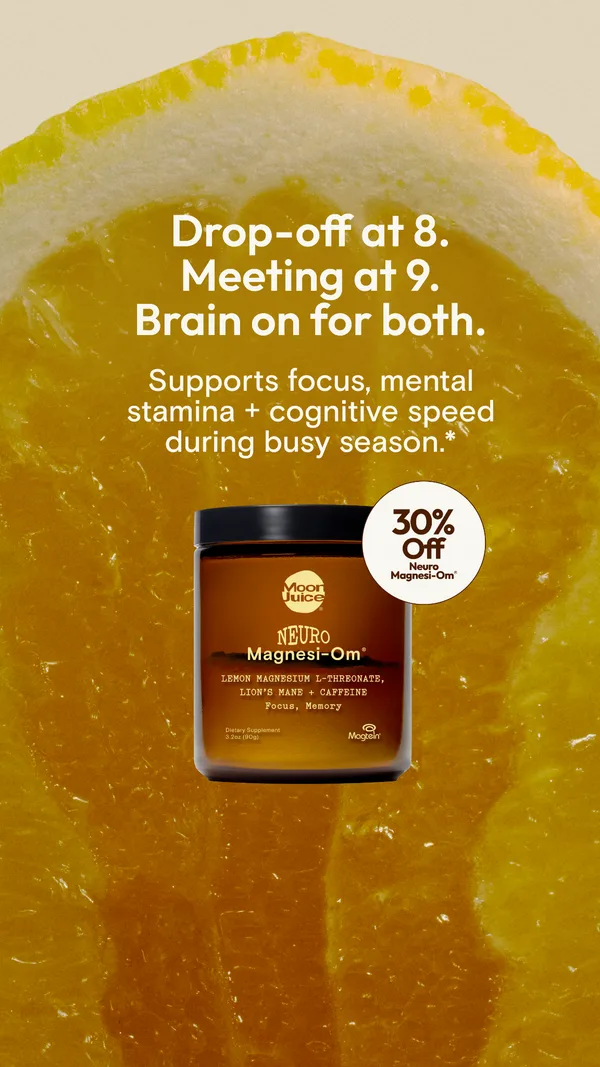
“Drop-off at 8. Meeting at 9. Brain on for both.”
Why it works
A macro slice of citrus fills the background with the headline in white above a jar, and a round 30% badge overlaps the container. The line sells a morning, not an ingredient: two appointments and a brain ready for both. The supported benefit comes second and carries an asterisk. Steal the citrus trick: flavor and lift arrive without either word being written.
Started 10 Sep 2026. Live when checked on 25 Oct 2026. View in Meta Ad Library ↗
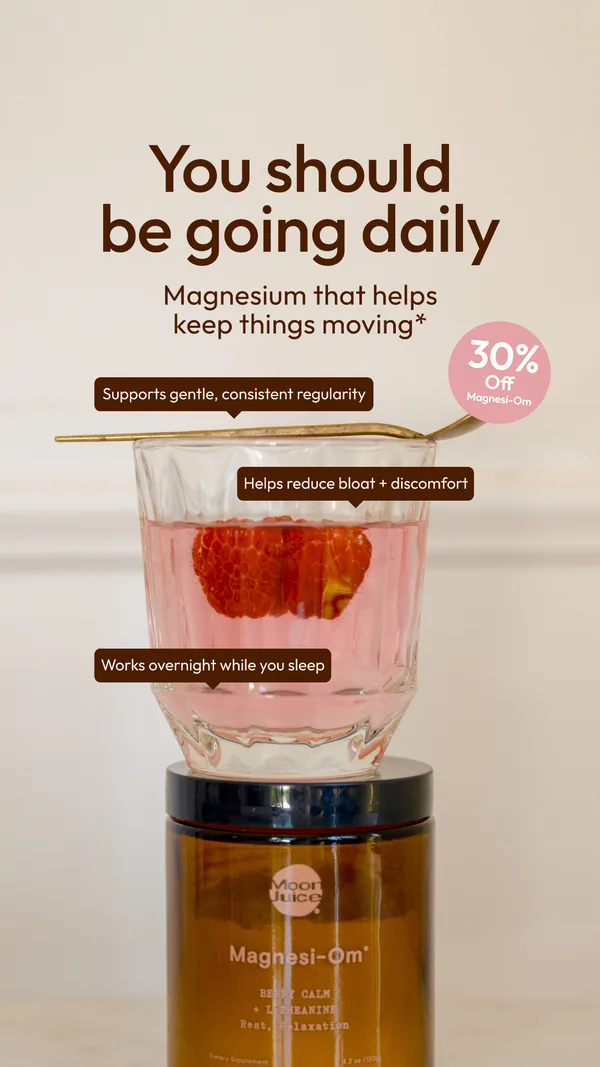
“You should be going daily”
Why it works
A glass of pink drink with a raspberry rests on top of the jar, dark callouts point at the glass, and a pale pink 30% badge sits at the upper right. The headline is a pun about regularity, said plainly enough for a feed, while the callouts hold the benefits in the brand's own tone. Stacking glass on jar shows the powder as a drink, which a tub alone could not.
Started 10 Sep 2026. Live when checked on 25 Oct 2026. View in Meta Ad Library ↗
Name the symptom, explain it · 3
Lemme opens on brunch and on jeans that do not fit, and Thesis opens on a dopamine reset plan for women. A named moment gives the shopper a reason to care before the claim arrives, with its asterisk.
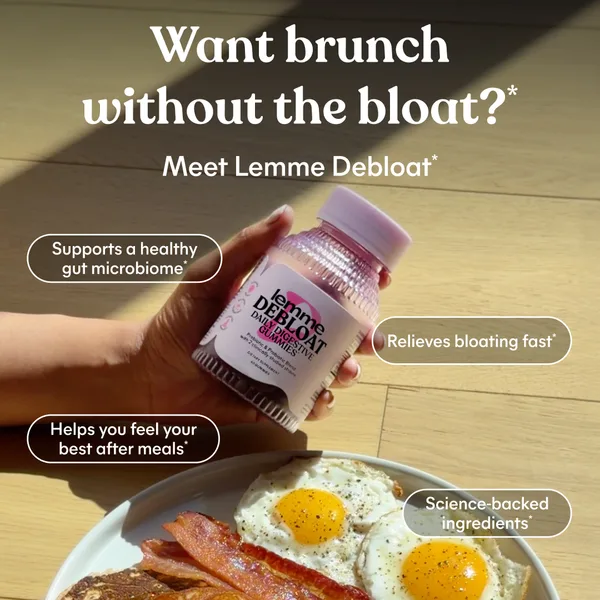
“Want brunch without the bloat?”
Why it works
Eggs, bacon and pancakes sit beneath a hand holding the bottle, with rounded benefit pills around it. The headline names an occasion, brunch, instead of a symptom alone, so the shopper pictures when the product would matter. Every pill carries an asterisk, the visual cue that the line is a supported claim and not a promise. Worth copying: a plate of food shows the moment the product is for, which a result photo cannot.
Started 28 Jul 2026. Live when checked on 25 Oct 2026. View in Meta Ad Library ↗
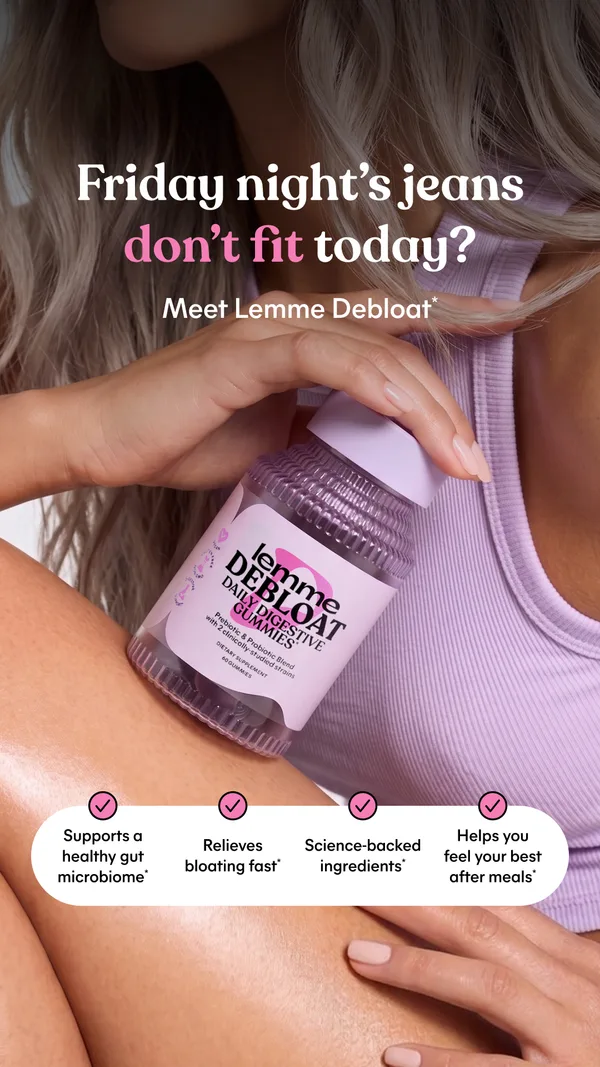
“Friday night's jeans don't fit today?”
Why it works
A close crop of the bottle resting on a shoulder, with a hook about jeans and a strip of ticked benefits along the bottom. The question names a feeling a shopper has had, with no before-and-after photo and no measurement. Lemme ran this and the brunch version under one body of copy, each for 89+ days.
Started 28 Jul 2026. Live when checked on 25 Oct 2026. View in Meta Ad Library ↗
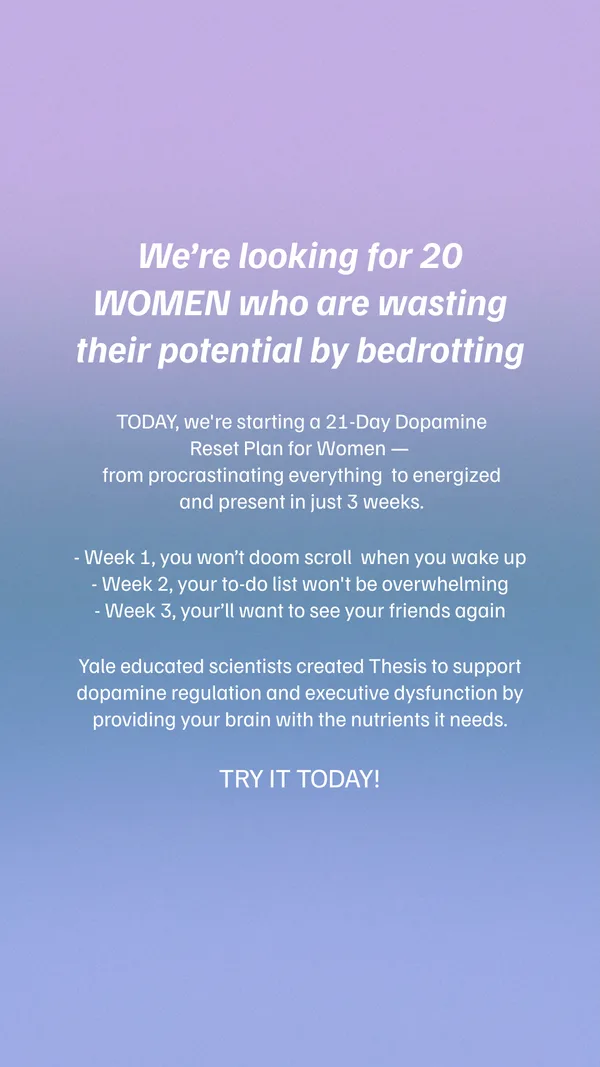
“21-Day Dopamine Reset Plan for Women”
Why it works
No product appears. White text on a purple-to-blue gradient is written like a casting call for a program, with weekly milestones that each describe a change in an ordinary day, such as not scrolling on waking. The supplement arrives only in the closing paragraph. Presenting a routine in place of a pill lets the ad talk about lived change while saying little about the body.
Started 5 Aug 2026. Live when checked on 25 Oct 2026. View in Meta Ad Library ↗
Shot at home, person in frame · 4
JSHealth Vitamins, Nature's Bounty and Nature Made all show a person with the bottle in a home, and the disclosure, where there is one, sits in the same frame.
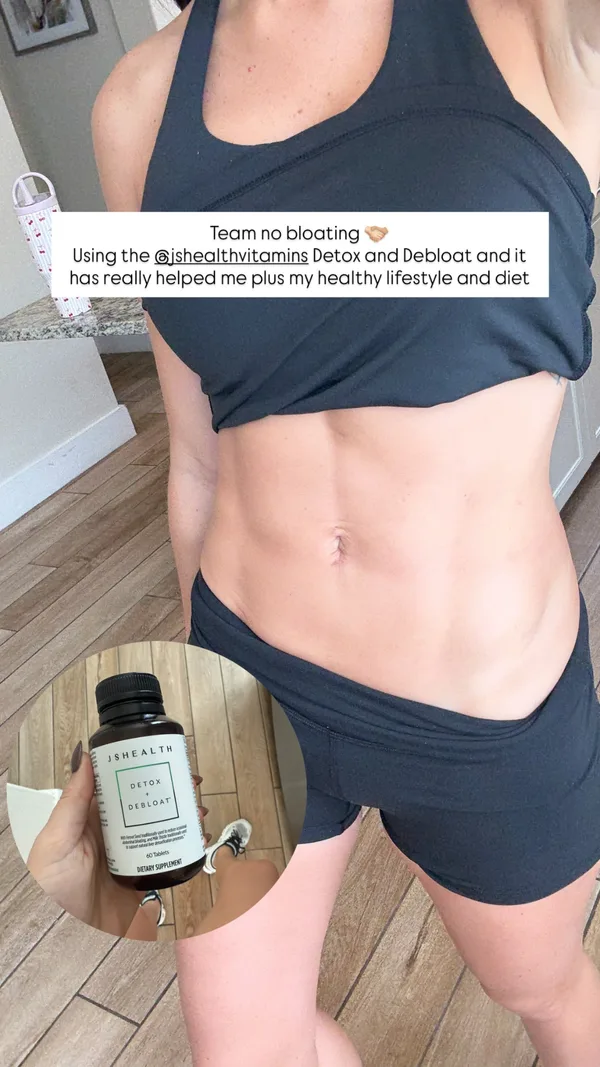
“Team no bloating”
Why it works
A mirror-style selfie crops to the midsection, with a white caption box across the top and a round inset of the bottle in the lower left. The caption speaks in first person and credits the product alongside "my healthy lifestyle and diet", which keeps the claim modest and the voice personal. Cropping to the stomach tells the shopper what the bottle is for before a single word is read.
Started 31 Mar 2026. Live when checked on 25 Oct 2026. View in Meta Ad Library ↗
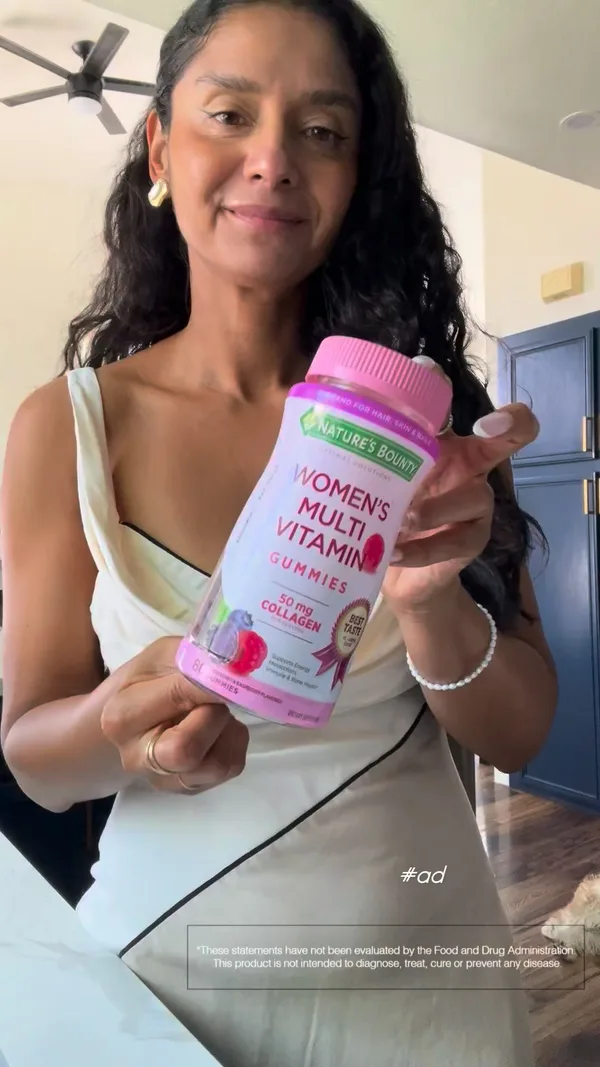
“Your Daily Wellness Gummy”
Why it works
A creator stands in a home and holds the bottle toward the camera, with "#ad" in the lower right and the FDA line in a small box beneath it. The disclosure and the disclaimer are both inside the picture, so they travel with the video wherever it is shown. The claim stays at the level of daily wellness, a modest ask for a multivitamin gummy aimed at women. Use the picture itself for disclosures, since a caption can be cut.
Started 16 Jul 2026. Live when checked on 25 Oct 2026. View in Meta Ad Library ↗
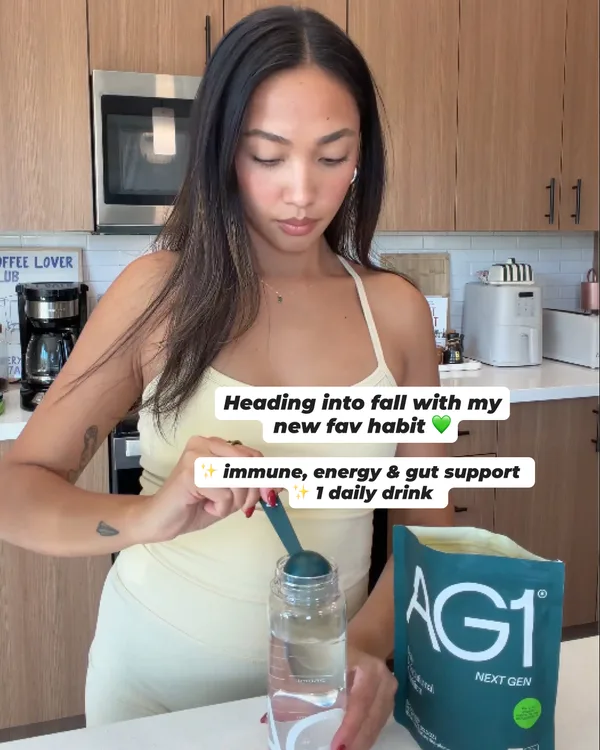
“Heading into fall with my new fav habit”
Why it works
A woman scoops powder into a water bottle in a kitchen, with the bag in the lower right and sticker captions across the middle. The captions do the claiming, "immune, energy & gut support", in the voice of someone describing a habit, while the body copy adds a stack of free items for subscribers. In one frame the viewer sees the whole routine: scoop, bottle, kitchen counter.
Started 6 Sep 2026. Live when checked on 25 Oct 2026. View in Meta Ad Library ↗
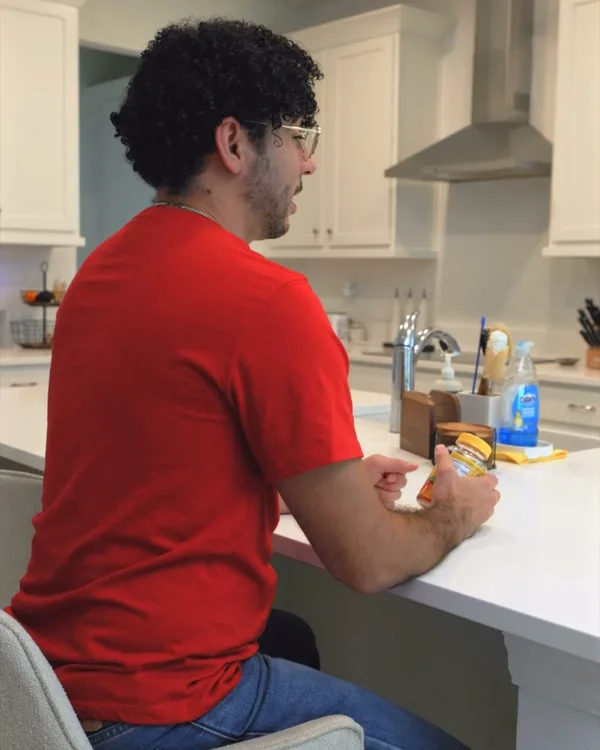
“Look at immunity from a new angle with Nature Made.”
Why it works
A man in a red shirt sits side-on at a kitchen island, looking down at a small bottle in his hand. There is no text on the picture, so the copy plays on it: "from a new angle" is literal, because the camera sees him from behind. The ad claims nothing beyond a look at immunity. It shows a supplement as something someone picks up in an ordinary kitchen.
Started 2 Oct 2026. Live when checked on 25 Oct 2026. View in Meta Ad Library ↗
Headline formulas that sell the routine, not the cure
Lifted from the ads above. Swap in your own product.
- 01Tastes like [familiar flavor]Dose, “Tastes Like An Orange Creamsicle”, 243 days
- 02Want [occasion] without the [symptom]?Lemme, “Want brunch without the bloat?”, 89 days
- 03[Time and place]. [Time and place]. [Product] on for both.Moon Juice, “Drop-off at 8. Meeting at 9. Brain on for both.”, 45 days
Selling a habit when a result can't be shown
- Lead with taste or priceDose's two longest runs open on a flavor and a discount, and the function sits in smaller type below.
- Name the moment, not the cureMoon Juice sells "Drop-off at 8. Meeting at 9" and Lemme sells brunch, so the shopper pictures a day before reading a claim.
- Put the footnote in the frameLemme marks each benefit with an asterisk, and AG1 ties each percentage to a dagger and a footnote.
- Let a customer say the resultTransparent Labs and ARMRA each sign a customer's words with a first name and an initial, so the result belongs to a person and not the brand.
- Tag every paid creatorNature's Bounty puts "#ad" inside the video frame, and JSHealth Vitamins tags a partnership beside a code.
- Run one message under two picturesKaged, Future Kind and Lemme each ran a single body of copy under two images, one for a glance and one for a longer read.
Sizes and Safe Zones are on our Instagram Safe Zone checker page.
Claims, asterisks and footnotes
The rule. FDA rules for supplement labeling let a product make a claim about how a nutrient affects the body's structure or function, with the FDA disclaimer alongside, and bar any claim to treat, cure or prevent a disease. Meta's ad standards add their own limits, including on before-and-after images and on ads that suggest a person's body needs fixing.
The disclaimer rides along. Nature's Bounty and ARMRA print the FDA line inside the picture, and Moon Juice and JSHealth Vitamins carry it in the body copy under the claim.
Marks tie a claim to its footnote. Lemme puts an asterisk on every benefit pill, and AG1 marks each of its percentages with a dagger that leads to a footnote in the copy describing the study.
Borrowed names. Thesis names Adderall in the picture and calls its blend "Nature's Adderall" in the body copy, borrowing a word the shopper already knows.
Sources: ecfr.gov, transparency.meta.com
Paid creators and codes
Two tags, two styles. Nature's Bounty sets "#ad" in the corner of the video itself. JSHealth Vitamins writes "#JSHealthPartner" on a story that also carries a discount code.
The rule. The FTC's Endorsement Guides expect a clear disclosure when a creator has a material connection to the brand, such as payment, free product or a code that earns them money. A tag inside the picture is hard to miss.
Quotes with a name. ARMRA credits one customer quote to Kari W., and Transparent Labs credits another to Ronald W. A first name and an initial keeps the voice personal without a full identity.
Source: ecfr.gov
Supplement ad questions, from claims to creators
What can a supplement ad say on Meta?
Mostly how an ingredient supports a normal function of the body, with the FDA disclaimer where a claim is made, and never that a supplement treats, cures or prevents a disease. Moon Juice, Nature's Bounty and ARMRA all print the disclaimer in the ad, and Meta's ad standards add limits on before-and-after images.
Do creator-style supplement ads need a disclosure?
Yes, whenever the creator has a material connection to the brand, such as payment, free product or a code. Nature's Bounty shows "#ad" inside the frame and JSHealth Vitamins tags its story as a partnership beside a discount code.
Do creator-style supplement ads outlast studio ones?
The data does not settle it, because it shows what brands kept running, not what sold. The longest run mixes both: a Dose selfie and a Dose offer stack each ran 243+ days, creator posts from JSHealth Vitamins ran 208+ days, and designed Kaged ads ran 188+ days.
How do supplement brands use a discount without leading with a claim?
They put the price in the picture and keep the function to one plain line. Moon Juice sets 30% off beside a jar, ARMRA prints a first-subscription discount next to the old and new price, and Dose shows a three-pack price, all under copy about taste, mood or routine.
Can one set of copy run under several pictures?
Yes, and several brands in this set did it. Kaged, Future Kind and Lemme each ran one body of copy under two different pictures, usually a glance version and a longer version.
Make supplement ads like these
The supplement ads that kept running sell taste, price, a customer's voice or a clear footnote, so paste your client's website or your own and see which of those fits the product.
How we pick ads. We search Meta's public Ad Library for ads from DTC brands that sell to US and UK shoppers, keep ads running 14 days or more, skip catalogue ads, and show at most 3 per brand. Days running is a spend signal: brands rarely keep paying for an ad that doesn't sell. Day counts are as of the check date above. Breakdowns are written by Gimme Gimme's ad analysis engine from each ad's image and copy, and edited by Josh Jackson, founder. Not affiliated with the brands shown; ads appear for commentary and analysis. To have an ad removed, email hello@getgimmegimme.com and we'll take it down within 7 days.